MBBS Colleges in Kerala: Admission Guide
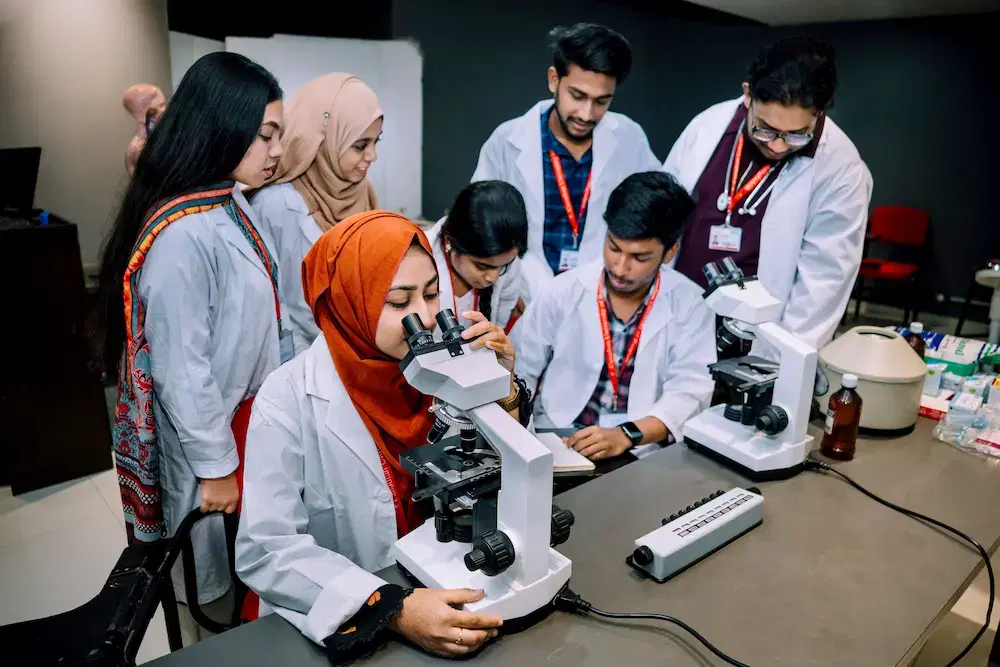
MBBS Colleges in Kerala: Admission Guide
Choosing a medical college is one of the biggest decisions for students who dream of becoming doctors. After completing higher secondary education and preparing for NEET, the next important step is finding a medical college that offers the right academic environment, clinical exposure and learning opportunities.
Kerala is an important destination for medical education in India, with government and private medical colleges located across different districts. Students exploring MBBS colleges in Kerala have several factors to consider, including admission eligibility, NEET scores, counselling procedures, tuition fees, hospital facilities and the overall learning environment.
However, choosing a college should involve more than looking at its name or location. A medical education lasts several years, and the quality of academic training and clinical experience can influence a student's development throughout the programme.
This guide explains how MBBS admission works in Kerala, what students should consider when selecting a medical college, and how parents can make a more informed decision.
Why Consider MBBS Colleges in Kerala?
Kerala offers students access to a range of medical education institutions, including government and private medical colleges. These institutions are located in different parts of the state, giving students multiple options when planning their medical education.
One important advantage of considering colleges within Kerala is familiarity with the local environment. Students from the state may find it easier to adapt to the language, culture, climate and general living conditions.
Other factors that make Kerala worth considering include:
1. Different college options
Students can explore government and private medical colleges based on their NEET performance, eligibility, admission category and financial circumstances.
2. Clinical learning opportunities
Medical education involves more than classroom teaching. Hospital-based learning, clinical postings and interaction with patients are essential parts of undergraduate medical training. Students should carefully examine the teaching hospital facilities associated with each institution.
3. Location and accessibility
The location of a medical college can influence accommodation, transportation, travel expenses and family visits. Choosing a location that suits the student's practical needs can make the transition to college easier.
4. Established medical education environment
Kerala has a long-standing medical education network. Students can evaluate institutions based on their academic infrastructure, faculty, hospital facilities and regulatory status.
Ultimately, the right college depends on the student's academic position, financial capacity and personal preferences.
Government and Private MBBS Colleges in Kerala
One of the first decisions students and parents face is whether to consider government or private medical colleges.
Both options provide opportunities to pursue medical education, but they differ in terms of admission competition, fee structures, seat categories and institutional arrangements.
Government Medical Colleges
Government medical colleges are often preferred because of their comparatively lower tuition fees.
However, admission can be highly competitive due to the demand for seats and the number of eligible NEET candidates.
When considering a government medical college, students should examine:
- Previous admission closing ranks and allotment trends.
- Available seats under the relevant admission categories.
- Hospital facilities and patient-care exposure.
- Academic infrastructure and teaching facilities.
- Location and accommodation arrangements.
Students should remember that previous-year cut-offs are only reference points. They do not guarantee admission in a future counselling round.
Private Medical Colleges
Private medical colleges provide additional MBBS admission opportunities for eligible students.
However, the fee structure and admission categories may vary considerably between institutions.
Before selecting a private medical college, students and parents should carefully review:
- Approved annual intake and available seats.
- Applicable tuition fees.
- Hostel and other institutional charges.
- Clinical facilities and associated teaching hospitals.
- Admission category and eligibility requirements.
- Refund rules and other financial conditions.
It is particularly important to understand the complete financial commitment before accepting an admission offer.
Students should not select a college simply because a seat appears available. The institution, fee structure, admission route and regulatory status must all be verified.
MBBS Eligibility Criteria in Kerala
Students seeking admission to MBBS programmes in Kerala must satisfy the applicable national eligibility requirements and state admission conditions.
The National Eligibility cum Entrance Test (NEET-UG) is the common entrance examination for undergraduate medical admission in India.
The following are the main eligibility areas students should understand.
1. Educational Qualification
Candidates generally need to have completed their higher secondary education or an equivalent qualifying examination with the required subjects.
The relevant subjects include:
- Physics
- Chemistry
- Biology or Biotechnology
- English
Candidates must meet the applicable subject and qualifying examination requirements specified in the current NEET information bulletin and medical admission regulations.
2. NEET Qualification
Qualifying NEET-UG is essential for MBBS admission.
Students must meet the applicable qualifying criteria for their category. The minimum qualifying percentile is determined according to the relevant examination and admission regulations.
It is important to understand that qualifying NEET does not automatically guarantee an MBBS seat.
Admission also depends on factors such as rank, seat availability, reservation provisions, counselling participation and the choices submitted by the candidate.
3. Age Requirements
Candidates must satisfy the prescribed minimum age requirement.
Under the applicable NEET-UG eligibility framework, candidates should have completed or attain 17 years of age by 31 December of the admission year.
Students should check the latest official examination bulletin for any applicable changes or clarifications.
4. Kerala State Eligibility
Students applying through Kerala state counselling must also satisfy the relevant nativity, eligibility and other conditions specified in the Kerala admission prospectus.
The applicable eligibility rules may differ depending on the admission category.
Therefore, students should carefully read the current prospectus issued by the Commissioner for Entrance Examinations (CEE), Kerala, before submitting their applications.
Understanding NEET Scores and MBBS Admission Chances
A student's NEET performance plays a major role in the MBBS admission process.
However, many students make the mistake of looking only at their examination score when estimating their admission chances.
The actual admission outcome depends on several factors.
NEET Score and All India Rank
After the examination, the National Testing Agency (NTA) publishes the NEET result and All India Rank.
Students should review their scorecard and understand their position in the overall merit list.
The score provides an indication of performance, while the rank helps students understand their relative position among candidates.
Previous-Year Cut-Offs
Previous-year cut-offs can help students understand admission trends.
However, cut-offs may change depending on:
- Number of candidates appearing for NEET.
- Overall examination performance.
- Number of available MBBS seats.
- Reservation and admission categories.
- College preferences.
- Counselling rounds and vacancy positions.
Students should avoid depending entirely on previous-year cut-off figures when making admission decisions.
College-Wise Closing Ranks
The closing rank of a college indicates the rank of the last candidate admitted under a particular category and counselling round.
It can be useful when preparing a college preference list.
However, students must compare closing ranks only when the admission category, quota, counselling authority and year are relevant and comparable.
A government seat, a private college seat and an NRI-category seat may have different admission conditions.
MBBS Admission Process in Kerala
Understanding the admission process can help students avoid missing important deadlines and making unnecessary mistakes.
MBBS admission in Kerala involves entrance examination qualification, registration, document verification, counselling and allotment.
Step 1: Appear for NEET-UG
Students must register for and appear in NEET-UG conducted by the National Testing Agency.
Candidates should carefully complete the application process, provide accurate information and keep their examination documents safe.
Step 2: Check the NEET Result
Once the result is declared, students should download their scorecard and check their qualifying status and All India Rank.
The result helps students assess their admission possibilities and plan their next steps.
Step 3: Register for Kerala State Counselling
Students seeking seats through Kerala's state admission process should follow the instructions published by the Commissioner for Entrance Examinations.
They must complete the required registration procedures, submit relevant information and provide documents within the prescribed deadlines.
Students should not assume that appearing for NEET automatically completes their state counselling registration.
Step 4: Complete Document Verification
Candidates must submit the documents required by the admission authority.
These may include:
- NEET scorecard.
- NEET admit card, where required.
- Class 10 certificate or proof of date of birth.
- Class 12 mark sheet and qualifying certificate.
- Transfer certificate.
- Identity proof.
- Nativity or other eligibility documents, where applicable.
- Category or community certificate, where applicable.
- Other documents specified in the current prospectus.
The exact document requirements may vary according to the candidate's category and admission process.
Step 5: Select Colleges and Submit Options
After completing the required counselling formalities, eligible candidates can select their preferred colleges according to the applicable option-registration procedure.
This is an important stage.
Students should prepare a realistic preference list instead of selecting colleges randomly.
Consider the following factors:
- Academic reputation and teaching environment.
- Location and accessibility.
- Hospital facilities.
- Total fees and additional expenses.
- Admission category.
- Personal preferences.
The order of preferences should reflect the student's genuine choices and financial circumstances.
Step 6: Check Allotment Results
The counselling authority publishes allotment results according to the applicable schedule and rules.
Candidates who receive an allotment must follow the instructions regarding fee payment, admission confirmation and reporting to the allotted college.
Missing the prescribed deadline can affect the candidate's admission opportunity.
Step 7: Complete College Admission
After allotment, students must complete the admission formalities within the specified period.
They should verify the admission letter, fee details, reporting requirements and documents before completing the process.
For the latest admission notifications and procedures, students should refer to the official CEE Kerala website.
How to Choose the Right MBBS College in Kerala
Selecting a medical college requires careful evaluation.
Instead of focusing only on rankings or recommendations from friends, students should assess each institution based on factors that can directly influence their medical education.
1. Verify Recognition and Approved Intake
Before selecting any institution, verify its current regulatory status and approved MBBS intake.
The National Medical Commission (NMC) provides official information about medical colleges and their approved courses.
Students should not rely entirely on advertisements, social media posts or information shared by third parties.
Check the relevant academic year's college and course information through the NMC college and course search.
2. Evaluate the Teaching Hospital
A medical college's associated hospital is an important part of undergraduate medical education.
Students should consider:
- Availability of clinical departments.
- Patient-care facilities.
- Clinical training arrangements.
- Exposure to different medical conditions.
- Infrastructure for practical learning.
Clinical experience is essential because it helps students connect theoretical knowledge with real medical practice.
3. Understand the Faculty and Academic Environment
Experienced faculty members and an organised academic environment can support students throughout their medical education.
Students can explore information about teaching departments, academic facilities, learning resources and student support systems.
They should also look for reliable information about the institution's teaching and assessment practices.
4. Compare the Complete Fee Structure
The total cost of medical education should be considered before accepting a seat.
Apart from tuition fees, students may need to account for:
- Hostel accommodation.
- Mess charges.
- University and examination fees.
- Caution deposits.
- Books and learning materials.
- Transportation.
- Other institutional expenses.
The fee structure may differ according to the college and admission category.
Always obtain the applicable official fee information before making a financial commitment.
5. Consider Hostel and Student Facilities
MBBS is a demanding academic programme, so the student's living environment also matters.
Parents should consider accommodation, food, safety arrangements, transportation, library facilities and access to student support services.
A comfortable living environment can help students manage their academic responsibilities more effectively.
6. Look Beyond Rankings
Rankings and online reviews can offer some useful information, but they should not be the only basis for selecting a college.
A college that appears high on a general online list may not necessarily be the most suitable option for every student.
The student's admission category, budget, academic preferences and location requirements should all be considered.
What Is the Duration of the MBBS Course?
The MBBS programme in India generally involves four and a half years of academic and clinical education, followed by a compulsory one-year rotating internship.
The programme is designed to provide students with a foundation in medical sciences, clinical knowledge and practical patient-care experience.
During the course, students study subjects across different stages of medical education.
These include:
- Anatomy.
- Physiology.
- Biochemistry.
- Pathology.
- Pharmacology.
- Microbiology.
- Forensic Medicine.
- Community Medicine.
- General Medicine.
- General Surgery.
- Paediatrics.
- Obstetrics and Gynaecology.
- Other clinical and allied subjects.
The programme combines classroom learning, practical sessions, clinical postings and supervised training.
After completing the prescribed academic requirements and internship, graduates must fulfil the applicable registration and licensing requirements to practise medicine in India.
Common Mistakes to Avoid During MBBS Admission
Even students who perform well in NEET can face difficulties during admission if they do not understand the counselling process.
Here are some common mistakes to avoid.
1. Depending only on NEET marks
A score alone does not determine admission. Students should also understand their rank, category, available seats and counselling possibilities.
2. Ignoring counselling deadlines
Missing registration, option submission, fee payment or reporting deadlines can affect admission opportunities.
3. Selecting colleges without checking fees
Parents should understand the complete financial commitment before selecting a college.
4. Trusting unofficial admission promises
Students should avoid individuals or agencies claiming to guarantee MBBS admission without following the official counselling and allotment process.
5. Not verifying college recognition
Always verify the institution's current regulatory status and approved intake for the relevant academic year.
6. Choosing a college without understanding the admission category
Different categories can have different eligibility conditions, fee structures and counselling procedures. Students should understand these details before submitting their preferences.
7. Relying on outdated information
Admission procedures, seat availability, fee structures and eligibility conditions can change. Always use the latest official notifications.
How IVS Study Can Help Students Explore MBBS Admission Options
Choosing between different medical colleges can be challenging, particularly when students and parents are unfamiliar with admission categories, counselling procedures and college-specific requirements.
IVS Study aims to support students through the process of exploring higher education opportunities and making informed admission decisions.
With appropriate admission guidance, students can better understand their available options and the steps involved in pursuing medical education.
Students and parents exploring MBBS colleges in Kerala can seek guidance on:
- Understanding MBBS admission requirements.
- Exploring suitable college options.
- Understanding counselling procedures.
- Reviewing admission categories and eligibility.
- Comparing college locations and facilities.
- Understanding the importance of verifying fee structures.
- Preparing for the next stages of the admission process.
Every student's academic profile and admission circumstances are different. Therefore, college selection should be based on individual eligibility, available options and financial considerations.
If you are planning to pursue MBBS in Kerala, getting the right information before making a decision can help you approach the admission process with greater confidence.
Planning for MBBS admission?
Connect with IVS Study to discuss your medical education plans and explore the admission guidance available to you.
Frequently Asked Questions About MBBS Colleges in Kerala
1. Which are the 12 medical colleges in Kerala?
The number of MBBS medical colleges in Kerala is not limited to 12. The state has government and private medical institutions offering undergraduate medical education. According to the National Medical Commission's 2026–27 seat-matrix information, Kerala has 36 listed MBBS institutions, including government and private institutions.
Some well-known institutions include Government Medical College, Thiruvananthapuram; Government Medical College, Kozhikode; Government Medical College, Kottayam; Jubilee Mission Medical College, Thrissur; and Amrita School of Medicine, Kochi.
Students should refer to the latest NMC college list and Kerala counselling notifications for the current list of recognised institutions and approved seats.
2. How much NEET score is required for MBBS in Kerala?
There is no single NEET score that guarantees MBBS admission in Kerala. The required score depends on the college, admission category, seat quota, counselling round and competition in that admission year.
Government medical college seats generally have higher competition than many private medical college seats. Students should consider their NEET All India Rank, Kerala state rank, applicable reservation category and previous-year college-wise closing ranks when assessing their admission possibilities.
Qualifying NEET is only the first requirement. Candidates must also participate in the relevant counselling process and satisfy the admission conditions.
3. How much are the fees for MBBS in Kerala?
MBBS fees in Kerala vary depending on whether the student chooses a government or private medical college and the applicable admission category.
Government medical colleges have substantially lower fees. The Directorate of Medical Education, Kerala, currently lists an annual MBBS fee total of ₹28,950, including the listed tuition and other charges.
For private medical colleges, fees are considerably higher and vary by institution and category. The 2025–26 notified tuition figures for several self-financing colleges were approximately ₹8.10 lakh to ₹9.31 lakh annually for general-category seats, with NRI tuition figures reaching approximately ₹22.74 lakh annually.
However, Kerala issued revised MBBS fee directions in July 2026, and the applicable private-college fee arrangements are subject to the latest government and regulatory decisions. Students should verify the current official fee order before accepting admission. Hostel, mess and other expenses may be additional.
4. What are the top 5 MBBS colleges in Kerala?
There is no single universally accepted ranking of the top five MBBS colleges in Kerala. Students should compare medical colleges based on their academic environment, hospital facilities, clinical exposure, faculty, regulatory recognition, infrastructure and admission requirements.
Institutions worth researching include:
Government Medical College, Thiruvananthapuram.
Government Medical College, Kozhikode.
Government Medical College, Kottayam.
Jubilee Mission Medical College and Research Institute, Thrissur.
Amrita School of Medicine, Kochi.
This is an illustrative shortlist, not an official ranking. Students should independently evaluate each institution and check its current recognition, approved intake, fee structure and counselling details before making a decision.
5. Is NEET compulsory for MBBS admission in Kerala?
Yes. NEET-UG qualification is required for MBBS admission in India. Candidates must also satisfy the applicable eligibility and counselling requirements.
6. Can I get MBBS admission in Kerala with a low NEET score?
Admission possibilities depend on the candidate's rank, category, seat availability, counselling round and admission quota. Students should review the latest allotment trends and available options rather than relying on a single score estimate.
7. What is the difference between government and private MBBS colleges in Kerala?
Government and private colleges differ in management, fee structures, admission categories and seat availability. Both must meet the applicable regulatory requirements. Students should compare individual institutions before making a choice.
8. How can I find the best MBBS college in Kerala?
There is no single college that is automatically the best choice for every student. Compare recognition, teaching hospital facilities, faculty, academic infrastructure, fee structure, location and student facilities before deciding.
9. Can students from other states apply to MBBS colleges in Kerala?
Students from other states may be eligible for certain admission categories, depending on the applicable counselling rules and seat availability. State eligibility requirements and All India Quota provisions should be checked in the relevant official prospectus and counselling notifications.
10. How long does it take to complete MBBS in India?
The MBBS programme generally includes four and a half years of academic education followed by a one-year compulsory rotating internship, subject to the applicable regulations.
11. Does qualifying NEET guarantee an MBBS seat?
No. Qualifying NEET makes a candidate eligible to participate in the admission process, subject to other conditions. Actual admission depends on merit, seat availability, counselling and the applicable admission rules.
12. Where can I check the latest MBBS admission notifications in Kerala?
Students can check the Commissioner for Entrance Examinations (CEE), Kerala, for state counselling notifications and the Medical Counselling Committee (MCC) for applicable All India Quota counselling information. The NTA website provides NEET examination updates.
13. What should I check before accepting an MBBS admission offer?
Verify the college's current recognition, approved intake, admission category, official allotment, complete fee structure and reporting instructions. Never make a payment based solely on an unofficial admission promise.
14. Can IVS Study help me explore MBBS college options?
Students and parents can contact IVS Study to discuss their medical education plans and explore the admission guidance available. College selection should always be based on the candidate's eligibility, official counselling options and verified institutional information.
Final Advice
Pursuing MBBS is a major academic and financial commitment. Choosing the right medical college requires careful research, realistic planning and a clear understanding of the admission process.
Students should look beyond college names and consider the quality of education, clinical learning opportunities, regulatory recognition, financial requirements and their own long-term goals.
With accurate information and proper planning, students and parents can make more confident decisions about medical education in Kerala.
Admission information should always be checked against the latest official notifications, prospectuses and regulatory updates for the relevant academic year.